Model Rocketry
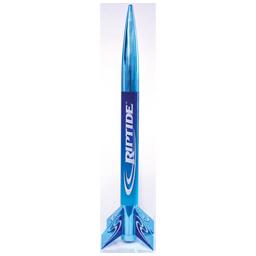
Throughout life, many of us have launched a model rocket at one time or another. More than likely, this was done with a small home-scale kit or setup. Today, these styles of rockets are sold by Estes and Quest Aerospace which are available in most hobby shops throughout the US and abroad. These rockets commonly use black powder motors up to D (20 N-sec) size. Each succeeding letter denotes up to twice the impulse of the smaller letter, which means D would be twice as powerful as C, C is twice as powerful as B, and so on. These type of rockets usually only weigh a few ounces and fly less than 2,000 feet high. This makes it possible to fly in nearly any open space without special permission. This style of rocket is usually easy to build, safe for beginners to launch, and motors only cost a few dollars each.
Mid-Power Rocketry
Beyond the basic model rocketry as indicated above, most refer to this class as mid-power rocketry. Rockets in this category typically use black powder or composite propellant motors in the E through G sizes. The largest manufacturer of mid-power rocket kits and motors is RCS Rocket Motor Components. Mid-power rockets generally weigh under a pound, but can fly much higher than model rockets. Rockets that contain more than 4 ounces of propellant or weigh over 1 pound require Federal Aviation Administration (FAA) notification 24 - 48 hours in advance. To build a mid-power rocket, they are not much more difficult than model rockets. Composite propellant rocket motors are more expensive than black powder motors, but usually less per individual unit of power.
High-Power Rocketry
The largest rockets built with commercially manufactured motors and sanctioned by national organizations are classified as High-Power Rockets. Motors used in this class range from H through O in size. The largest manufacturer of high-power rocket kits is LOC/Precision and Public Missiles. These rockets usually weigh from a few pounds to over a hundred pounds and can fly over 25,000 feet high. Some of the larger sophisticated high-power rocket motors require federal licensing and approvals to purchase or fly, and can only be flown at organized club launches held in unpopulated areas of large open space. High-power rockets are the most challenging and fly on pre-manufactured motors that appeal to hobbyists interested in larger vehicles, as well as enjoy the impressive flights with larger, more powerful, and more expensive motors. Also, advanced materials and techniques are required for high-power rockets because of the dramatically increased stresses encountered during flight.
Experimental Rocketry
Enthusiasts who build their own rocket motors instead of using commercially manufactured motors engage in a hobby rocket category called Experimental Rocketry. Motors can be any size, but usually tend to be in the larger high-power range. In some ways, experimental rocketry is less regulated than high-power rocketry, but still follows all FAA requirements. Hobbyists should know that making their own motors can be dangerous and should not be taken lightly. Experimental rocketry is appealing to modelers that either want to do everything themselves or enjoy the process of developing and making their own motors. This is not necessarily a money saving approach to the hobby, but instead a do-it yourself approach. AeroTech, a division of RCS Rocket Motor Components, was founded in 1995 to manufacture and sell rocket motor parts and materials for the experimental rocketry market.
|